
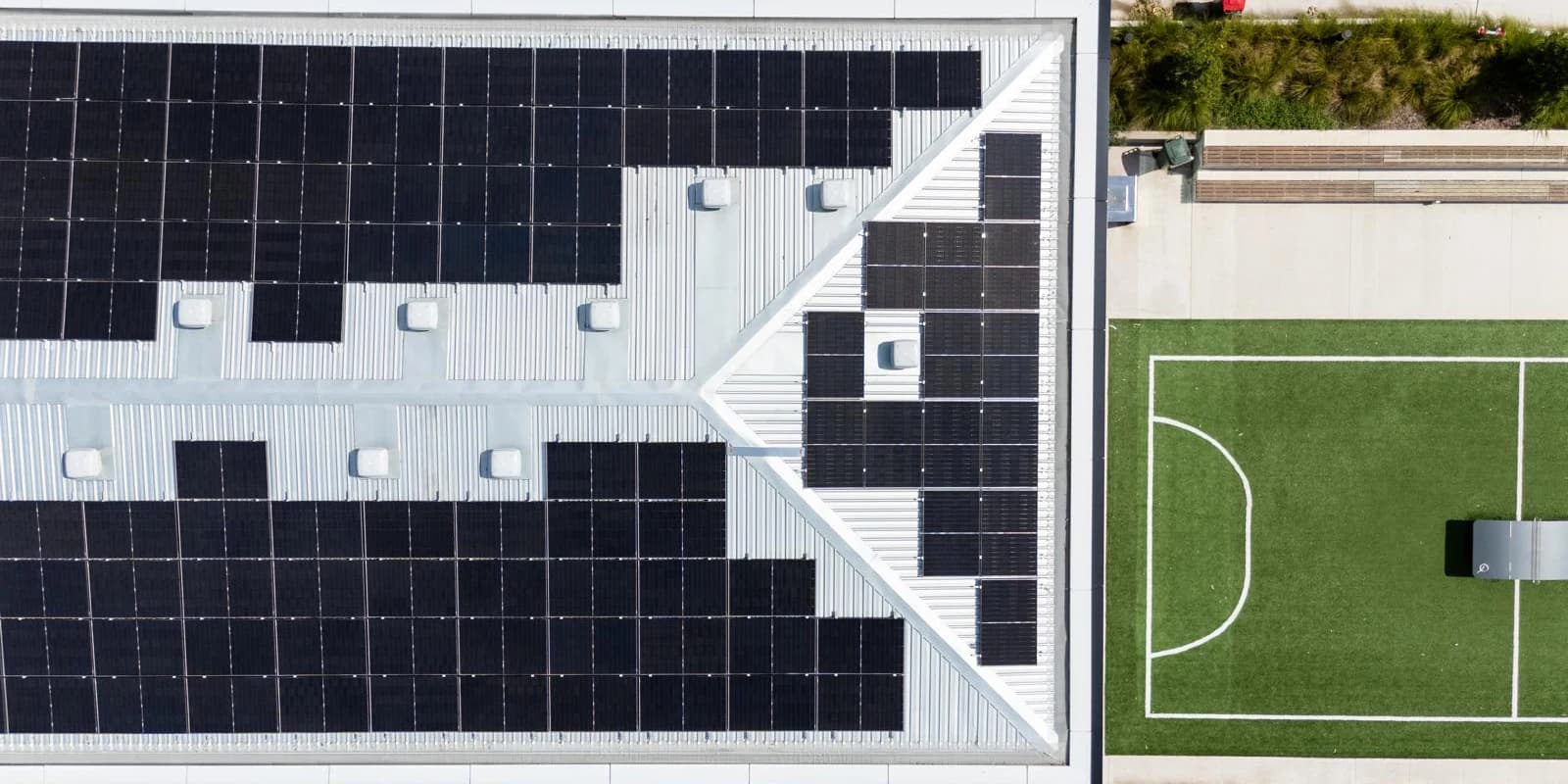
Your roof is worth money.
We’ll pay you for it.
Not a discount, and not a rebate. A commercial solar system installed for nothing, maintained for the life of the agreement. $100 for every kilowatt installed, paid the day it is switched on — a 200kW system is $20,000 back to your business, a 500kW system is $50,000. Funded by Agile. Delivered by SIPENERGY.
SAA accredited · 3,000+installed across NSW, VIC & QLD
$0
Capital from you, on sites that qualify
$100/kW
Cash back on every kilowatt — $100,000 on a 1,000kW system
3,000+
Systems installed across NSW, VIC & QLD
Why this is different
We will pay to put solar on your roof.
Solar works financially. The problem is that the capex competes with core business investment, and it usually loses.
Ownership brings responsibility with it too — performance risk, maintenance, warranty claims, insurance and compliance all land on you.
This one runs the other way.
$0
Nothing to fund
No capital, no finance to arrange, no asset on your balance sheet. The system is funded and owned by Agile Energy. You pay only for the energy it produces, at a fixed rate agreed before you sign.
$100/kW
Cash paid to you
This is the part nobody else is doing. $100 for every kilowatt installed, paid to your business on commissioning. $25,000 on a 250kW system, $50,000 on a 500kW. Not a credit, not a discount off a bill you were going to pay anyway.
0
Responsibility left for you
Monitoring, servicing, repairs and replacements sit with Agile, the owner of the system. No maintenance contract to negotiate, no balloon payment, no buyback obligation at the end of the term.
Are you sitting on an asset you have not capitalised on yet? Let your roof do the work — we will pay you for it.
The rate card
Three terms. Pick the one that fits your balance sheet.
The cash back is the same on all three terms. What changes is how long you commit for, and what you pay per kilowatt hour.
Every option is Zero Capital and includes the design, the install, monitoring, servicing, insurance and a performance guarantee.
| Term | You pay /kWh | Cash back on install | Suits |
|---|---|---|---|
| 7 years | 20.0c/kWh | $100/kW | Shorter lease left to run, or you want the asset handed over sooner |
| 10 years | 17.0c/kWh | $100/kW | The balanced one. Real saving, commitment most boards will wear |
| 15 years | 14.0c/kWh | $100/kW | Owner-occupiers going after the lowest rate available |
Your rate is fixed at signing. It is not exposed to the wholesale market or to retailer repricing — it moves only with CPI, once a year, for the length of the term. Compare them against your delivered cost per kilowatt hour, not the usage rate on your contract. Network and demand charges are typically 40–50% of a commercial bill, and no retailer negotiation touches them. The only way to cut them is to draw less from the grid.
What $100 a kilowatt actually pays you
Paid to the business once the system is switched on. It is passed on through the federal rebate. Not taken out of your rate.
50 kW
$5,000
100 kW
$10,000
200 kW
$20,000
250 kW
$25,000
500 kW
$50,000
750 kW
$75,000
1,000 kW
$100,000
The process
Four steps. The first one is a power bill.
- 01 · SIPENERGY
Send a bill
Upload a recent energy bill and tell us about the site. Two minutes, and no procurement process to start.
- 02 · AGILE + SIPENERGY
We run the numbers
Within two business days: what your roof could generate, the rate you would pay, and a straight answer on whether the site qualifies.
- 03 · SIPENERGY
You sign it, we design it
If the numbers work and you go ahead, we get to work on the design and the grid approval. No cash changes hands at signing.
- 04 · AGILE + SIPENERGY
We build it, then we pay you
Install, certification and every service visit after that. When the system is switched on you receive the cash payment for your roof.
Typical eligibility
How the PPA works- 50kW–1,000kW system
- A daytime load
- Usable roof or ground area
- Owner-occupier or a long lease
- Commercial & industrial only
Not sure? Send us your bill. We will take the guess work out and analyse your eligibility free of charge.
The three options
Fund it yourself, do nothing, or take the cash.
Every business looking at solar is choosing between the same three things. Laid out side by side, the argument for waiting gets thin.
| Comparison | This offer | Buy it outright | Do nothing |
|---|---|---|---|
| Upfront cost | $0, and cash back to you | Full system capex | $0 |
| Energy price certainty | Fixed for the term | Yes, once it is paid off | None. Repriced every 1–3 years |
| Performance risk | Ours. No generation, no invoice | Yours | — |
| Servicing, monitoring, insurance | Included | Your cost, every year | — |
| Balance sheet | Off balance sheet. An operating cost | Capitalised asset and depreciation | Nothing on it |
| Time to value | Day one | After a 4–5 year payback | Never |
Why tie up $400k? With a PPA you will start saving from day one, and you will receive $50,000 back to your business once the system is switched on.
The partnership
Funded by Agile.
Delivered by SIPENERGY.
One partnership, one streamlined process. Agile carries the capital and provides a performance guarantee.
SIPENERGY designs, installs, certifies and looks after the system. You deal with one team from start to finish.
The funding partner
Agile funds and owns the asset
An Australian-owned funder of behind-the-meter solar, with the Clean Energy Finance Corporation and Five V Capital on its share register.
- Funds 100% of the build. No capital and no finance for you to arrange
- Owns, insures and carries the performance risk for the whole term
- 65 GWh+ generated a year across 1,500+ assets under management
- National rollouts for Brickworks, Rentokil Initial, Autosports Group and RetireAustralia
The delivery partner
SIPENERGY builds it and looks after it
Electrician-founded, Sydney-based, and the nominated delivery partner for Agile in NSW. This offer is available exclusively through SIPENERGY.
- Designs, installs and certifies in house. Never subcontracted
- SAA accreditation S2915084 · NETCC Approved Seller and Installer
- NSW electrical contractor licence 461330C · 100% Australian owned
- 3,000+ systems installed across NSW, VIC and QLD
Questions
The things people ask first.
What is the catch? Why would anyone pay me to take solar?
Because your roof has value and you are not currently being paid for it. Under a power purchase agreement Agile funds, owns and maintains the system, SIPENERGY builds it and completes the work, and Agile earns a return over the term from the energy it sells you. A good roof with a steady daytime load is a genuinely attractive asset to fund. This offer passes part of that value to you at the start instead of spreading all of it across the term. In exchange, you commit to buying the energy the system produces, at a rate significantly lower than retail, for an agreed period.
What do I actually pay?
You pay for the energy the system produces, at 20.0c, 17.0c or 14.0c a kilowatt hour depending on the term you pick, fixed at signing and escalating with CPI. You keep buying the rest of your electricity from your retailer as normal. There is no capital cost, no finance to arrange and no maintenance bill. Your actual position depends on your site, your load profile and the term, which is exactly what the analysis works out.
The rate looks close to what we already pay. Where is the saving?
Almost always because the number being compared is the usage rate on your retail contract, not what a kilowatt hour actually costs you delivered. Add network and demand charges and the real figure is a long way north of it. Those charges are typically 40–50% of a commercial bill and no amount of retailer negotiation reduces them, because they are not contestable. The only way to cut them is to pull less out of the grid, which is what a system on your own roof does. We will do that comparison properly off your actual bill rather than argue about it.
We just renegotiated our energy contract. Isn’t that enough?
It handles one part of the bill and leaves the rest alone. Wholesale energy is roughly 40% of what you pay. Network charges are another 40%, and environmental and retail costs sit on top of that. A sharp procurement outcome moves the first number and nothing else, and it gets repriced again in one to three years. Generating on site is the only lever that reaches the other half.
How long is the agreement?
Seven, ten or fifteen years, and the rate follows the term. Seven years is the shortest commitment we can fund at these numbers. The term, the rate, the buyout points and what happens at expiry are all set out in the agreement before you sign anything. We would rather you asked hard questions early than late.
We would rather own it.
You do, at the end. The asset hands over cleanly at expiry, and there are buyout options at set points during the term if you want it sooner. What the agreement takes off you is the capital, the performance risk and the maintenance for as long as it runs. If owning it from day one is genuinely the priority, say so and we will quote you a direct purchase instead. We do both.
We might not be at this site in ten years.
The agreement travels with the site. It transfers to an incoming occupier, or it can be bought out against a schedule agreed at the start, so you know the number before you need it rather than after. A funded system on the roof is generally an asset in a sale or a lease negotiation, not an encumbrance.
We need cash more than we need savings.
Then take more of it up front. Beyond the standard $100 a kilowatt we can pay a larger lump sum on installation and recover it through a step-up in the rate across the term. You pick the amount, the rate adjusts, and you see both numbers side by side before you commit to either.
We lease our building. Are we out?
Not necessarily. It changes who needs to sign rather than whether it can happen. Where there is enough time left on the lease and the landlord is willing, these get done regularly, and a funded system is an easier conversation with a landlord than a request to spend their money. Tell us it is leased and we will tell you what the path looks like.
We already have solar. Is there any point?
Often, yes. Plenty of sites put panels up years ago, covered a fraction of the available roof, and assumed that was that. If you have roof left over, or your load has grown since, there may well be a second stage worth doing. Tell us what is already up there and we will work around it.
Why now rather than next year?
Two reasons. Design, grid connection approval and equipment lead times mean these projects take months rather than weeks, so the businesses talking now are the ones with systems going up while the current incentives apply. And the cash back is funded out of the federal rebate on the system, which is sized by a deeming period that shrinks every year. The contract is what has to be signed to hold the number. The build can be scheduled after it.
Is this available for my house?
No. This offer is commercial and industrial only. We do plenty of residential work, but it is a different conversation and a different page.
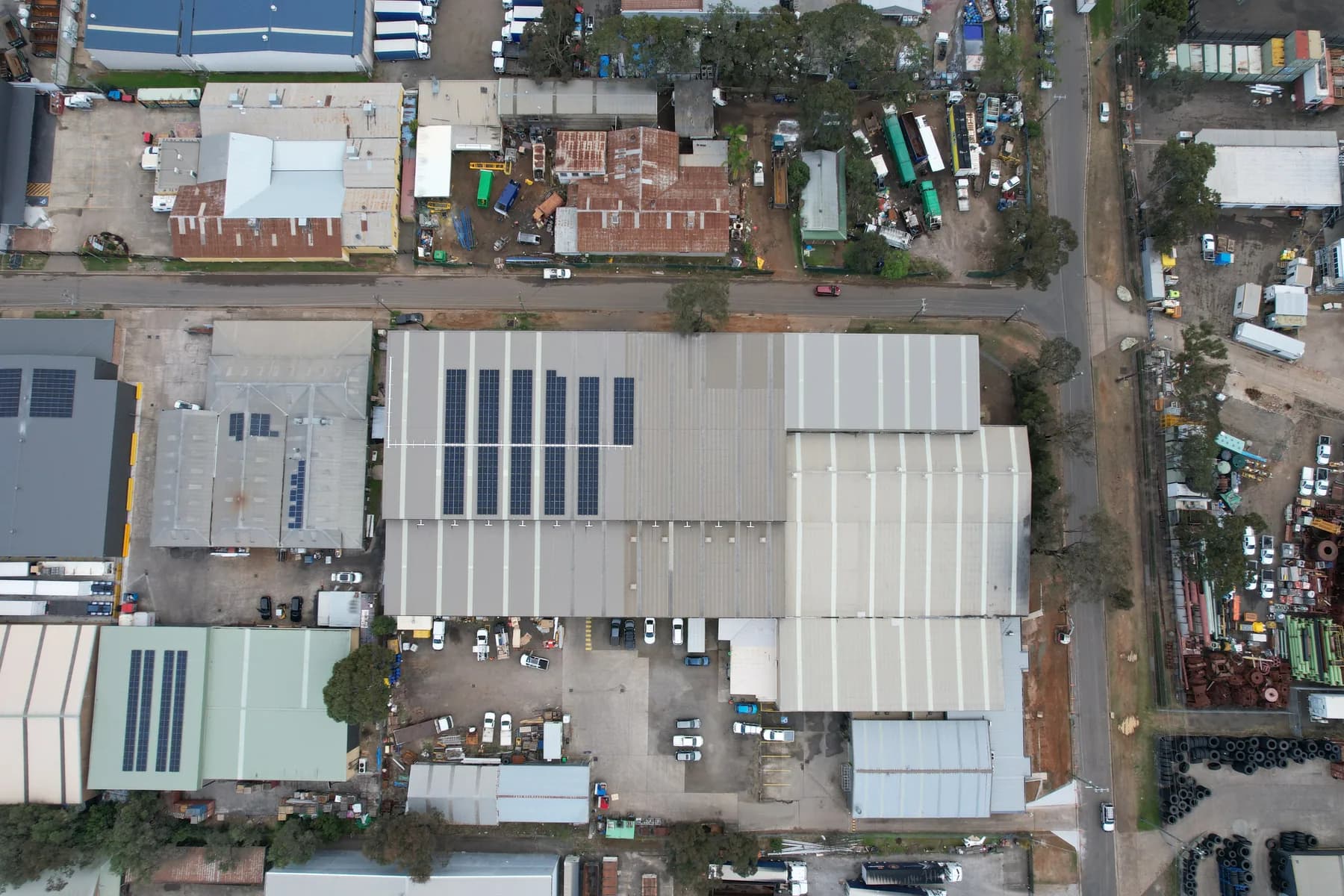
Free bill analysis
One bill.
A real number.
You’ll know what your roof could generate, what you’d pay for the energy, and whether a system can go up for nothing with money coming back to you. Worst case you find out your site doesn’t suit it, and that costs you two minutes.
Commercial intake
Tell us about your site.
Address, monthly electricity spend, roof access, and interval data if you have it. If you don’t, sign an authority letter and we’ll request it from your retailer for you. We come back with a written business case.
 Delivered by
The $100/kW cash payment applies to qualifying commercial and industrial sites under a power purchase agreement, is calculated on the installed system size in kilowatts, and is paid on commissioning. It is funded from the federal small-scale renewable energy scheme rebate on the system. Eligibility, the final system size and the final amount are confirmed in writing before any agreement is signed. It is not available on every site, it is not available for residential sites, and it is not a general offer.
Rates of 20.0c, 17.0c and 14.0c per kilowatt hour apply to the seven, ten and fifteen year terms respectively, are indicative pending site assessment, and are escalated annually by CPI for the length of the term. Comparisons to grid rates are made on a delivered cost per kilowatt hour, inclusive of network and demand charges. A larger upfront payment can be arranged in place of the standard rebate, in which case the rate above is adjusted; both figures are set out in writing before signing.
Zero upfront cost applies to sites meeting the qualification criteria above. Sites that don’t qualify may still suit a direct purchase. Figures in a bill analysis are estimates based on the information you supply and modelled generation for your location. They are not a guarantee of savings, output or financial outcome, and your actual position depends on your energy use, your retail contract and market rates over the term.